
On August 20, the Indian authorities issued the Online Game Promotion and Regulation Act 2025, in which the ban on genuine gold games has cost the local industry billions of dollars, although the early investment agency, Bitkraft Ventures, based in the United States and focused on the field of games and interactive media, has announced that it will increase investment in the Indian market.
Bitkraft manages six foundations with assets of over $1 billion and plans to focus on investment in local studios in India and the global market to develop original games, with a focus on game infrastructure and an AI-driven interactive media platform for global audiences. This was mainly due to the confidence of Bitkraft in the Indian market. Bitkraft expects that by the end of 2025, mobile games with within-year (IAP) revenues exceeding $100 million will have reached 5-6 sections.
Bitkraft’s report on India’s market investment, published on September 3, states: “This marks a major transformation from the former advertising-led profit model in India to a real top IAP market. The report adds: “India’s game industry begins with local change and is developed through integration of tools, teams and strategies, and the next chapter will turn these instincts into systems.”
Jens Hilgers, founding general partner of Bitkraft Ventures, stated: “With the establishment of a clear regulatory framework, India is ready for long-term capital and long-term planning. With consumer protection at its core, the new bill lays the foundation for a more credible and sustainable ecosystem. This is where global competitive enterprises are bred, and we look forward to working with Indian entrepreneurs to achieve this.”
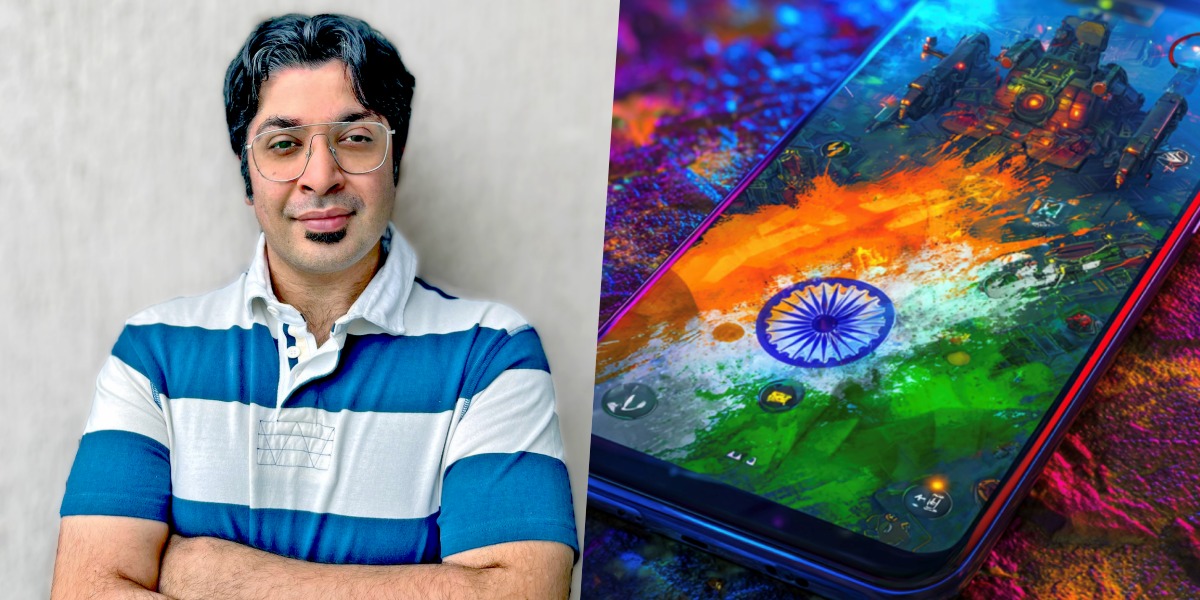
In December 2024, Bitkraft engaged Anuj Tandon, a senior person with 15 years of industry experience, as the first Indian District Partner to expand local business. Its Indian portfolio includes the hand-kicking studio Lila Gomes, the mobile game platform Gamezop, the technology-driven global entertainment company Mythik and the social investment platform StockGro. The company has also recently invested $5.4 million in the Pre-Seed Round of Finance for the Al GameRamp Game Growth Platform.
Anuj Tandon believes that the new bill not only “enhanced investor confidence”, but also that global institutional investors like Bitkraft have created a “more stable and stronger environment” to explore opportunities in the field of playrooms and interactive entertainment in India. He said, “The new framework of the online game bill not only enhances investor information, but also creates a stable and enabling environment for global institutional investors like Bitkraft, which allows us to double the opportunities in the field of playrooms and interactive entertainment in India. It also brings India to the same level as the market for mature global games such as South Korea and China, at a time of transformation of interactive media and games.”
According to the market research institute Niko Partners, India is the fastest-growing game market in Asia (based on income and number of players). Revenues from the mobile, PC and mainframe game markets in India are projected to exceed $1 billion in 2025, will reach $1.4 billion in 2028, with a five-year complex annual growth rate of 11.1 per cent (excluding real gold games and export earnings). The real gold game industry generated about $2.4 billion in revenue in 2024, representing the bulk of the total income of $3.8 billion for the Indian game industry.
In its report, Bitkraft states, “The gold game was once seen as a profit-breaker for the Indian game — high interest, light regulatory pressure and rapid growth.” The Agency believes that the gold game has proved to Indian developers that when game practices resonate with social status, customary cycles and indigenous culture, profit becomes possible. Many paid users in India were initially exposed to digital consumption through fantasy sports or competitive skills games, although the model itself remained uncertain. “The question now is whether these same triggers can be reactivated in a fully compliant long-term video game economy.”
Looking ahead, Bitkraft expects that, as the development of the ecosystem evolves, local studios that build products for the Indian market will be the long-term winner. “As the Indian game market deepens, we expect more indigenous content to replace global content, just as other media-styles of development are. The report emphasizes that “Indian players, despite their insufficient consumption depth, are compensated by product loyalty, providing vital mobility for games that depend on multiple people and social depth”.
Moneycontrol previously reported that the Indian video game market is showing a trend towards maturity, particularly in terms of player preferences and consumption habits, which encourages local studios to develop more ambitious and complex games. Shooting games continue to dominate domestic consumption spending, benefiting from Indian and Free Fire Max-like productions such as The Jedi for Life. They are currently the highest-paid game applications in India. The phenomenon has inspired 6-7 Indian game studios to develop home-grown mobile shooting games.
In addition to shooting games, strategic games such as Tribal Conflict, Evony and The Frozen Apocalypse have accumulated up to 5.7 million live Indian users. In the broader field of interactive media (comprising audio stories, regional videos, live broadcasts, spiritual technologies, fan platforms and friends), Bitkraft anticipates that the depth of content and distribution will define India ‘ s next wave of growth. “A platform built around a type, region or format will achieve higher retention rates, lower cost of access and greater profitability, especially for micro-short dramas.

Moneycontrol previously reported that the one-to-two-minute series designed for mobile-end viewing was rapidly gaining ground in India. This wave has led companies like Kuku FM, Pocket FM, ShareChat and Eloelo to launch over a dozen applications, all of which they want to seize. ” The behaviour patterns of the next billion users will be very different from those of the first users, who have language specificity, payment sensitivity and cultural uniqueness. Models that combine regional user experiences with sub-currents (e.g. Pocket FM), cross-format IPs with high-subscription revenues (e.g. Kuku) or sound-matching programmes for overseas users (e.g. Crunchyroll) are more likely to survive in market saturation.”