

Elon Mask Social Platform X officially launched the account information transparency feature, adding core data to the user information page showing the location of the account, the user name modification record, the original registration date and the client ‘ s source. This is intended to address the long-standing problem of robotic accounting for the platform, which will become more challenging in the age of artificial intelligence. The X Product Manager, Nikita Bill, disclosed the scheme in October last year and began testing from her personal and internal employee accounts. By displaying these key data, users are able to more accurately judge whether the interactive audience is real accounts or robots that are trying to spread false information. For example, an account number that claims to be from the United States, but the data show that it is active in an overseas area and that users can be vigilant about it.
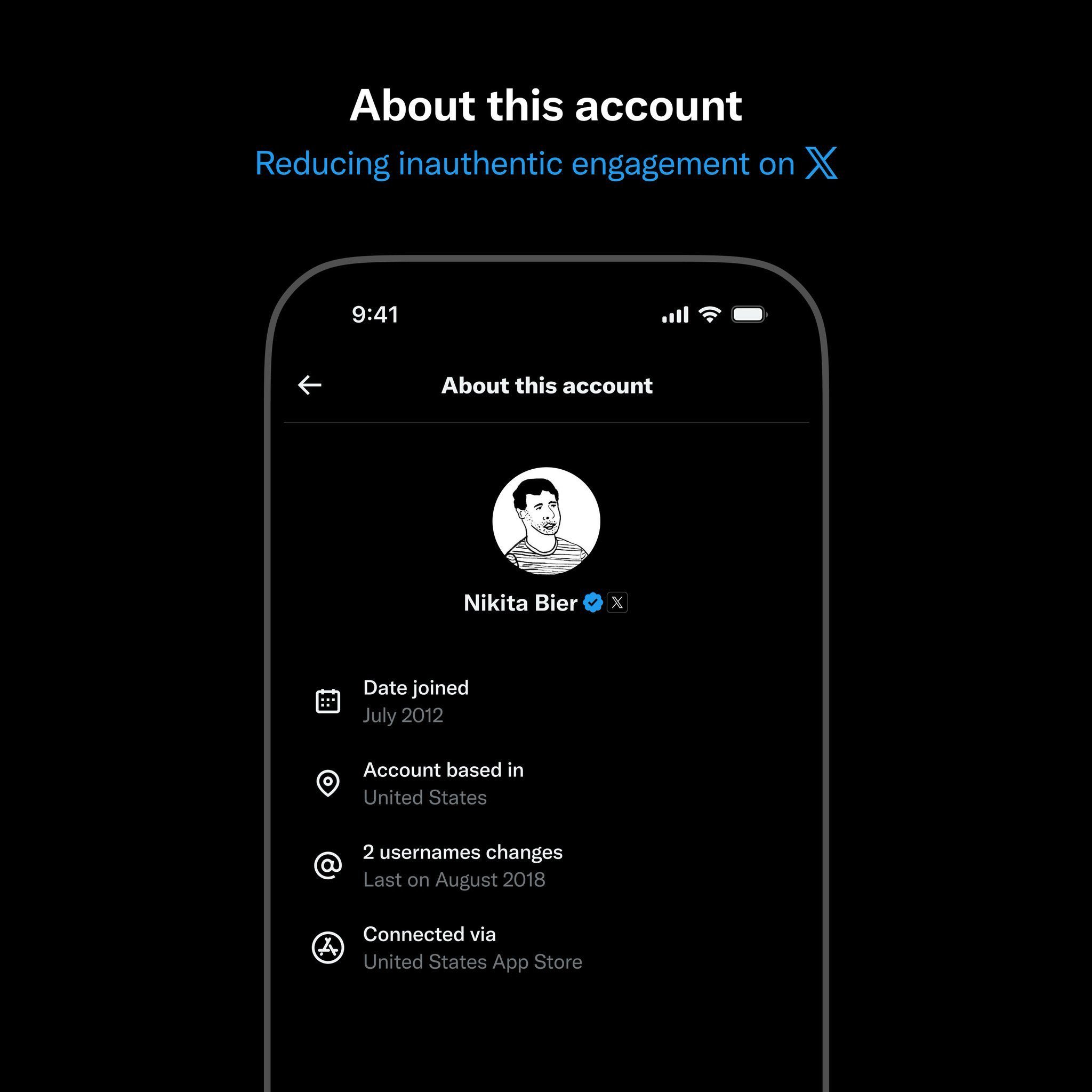
Last week, in response to the user’s proposal, Nikita Bill promised to “solve within 72 hours”, after which a new entry to the account was discovered on the personal data page by multiple users worldwide. Click on the “date of addition” in the personal data to show the following: X/twitter registration date, account operation country/area, number of changes to user name and final change time, client source (e.g. App Store or Google Play, USA). At present, however, complete information on the accounts of others is not fully available. This may be due to the phased roll-out strategy of X, which allows users to self-check for data accuracy. It is noteworthy that X allows users to choose to display precise countries or vague geographical areas (e.g., continents) in their “privacy and security” settings. Although X has stated that this option mainly serves some sensitive areas, currently United States users have the option of showing only areas.
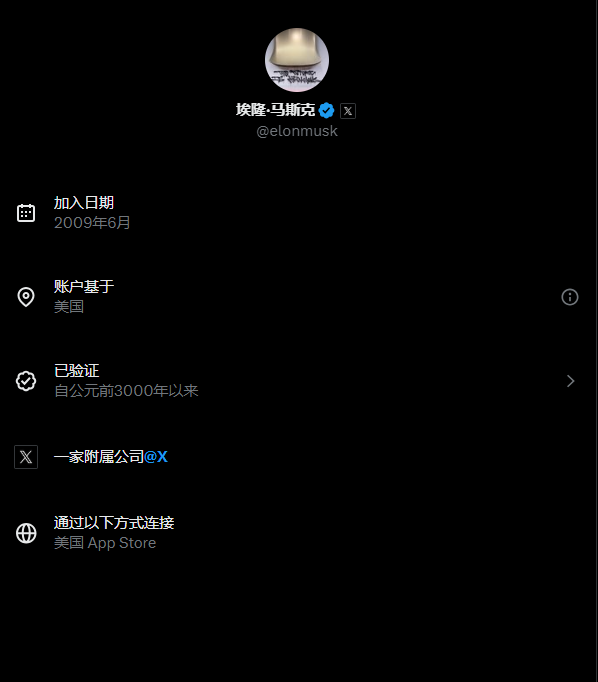
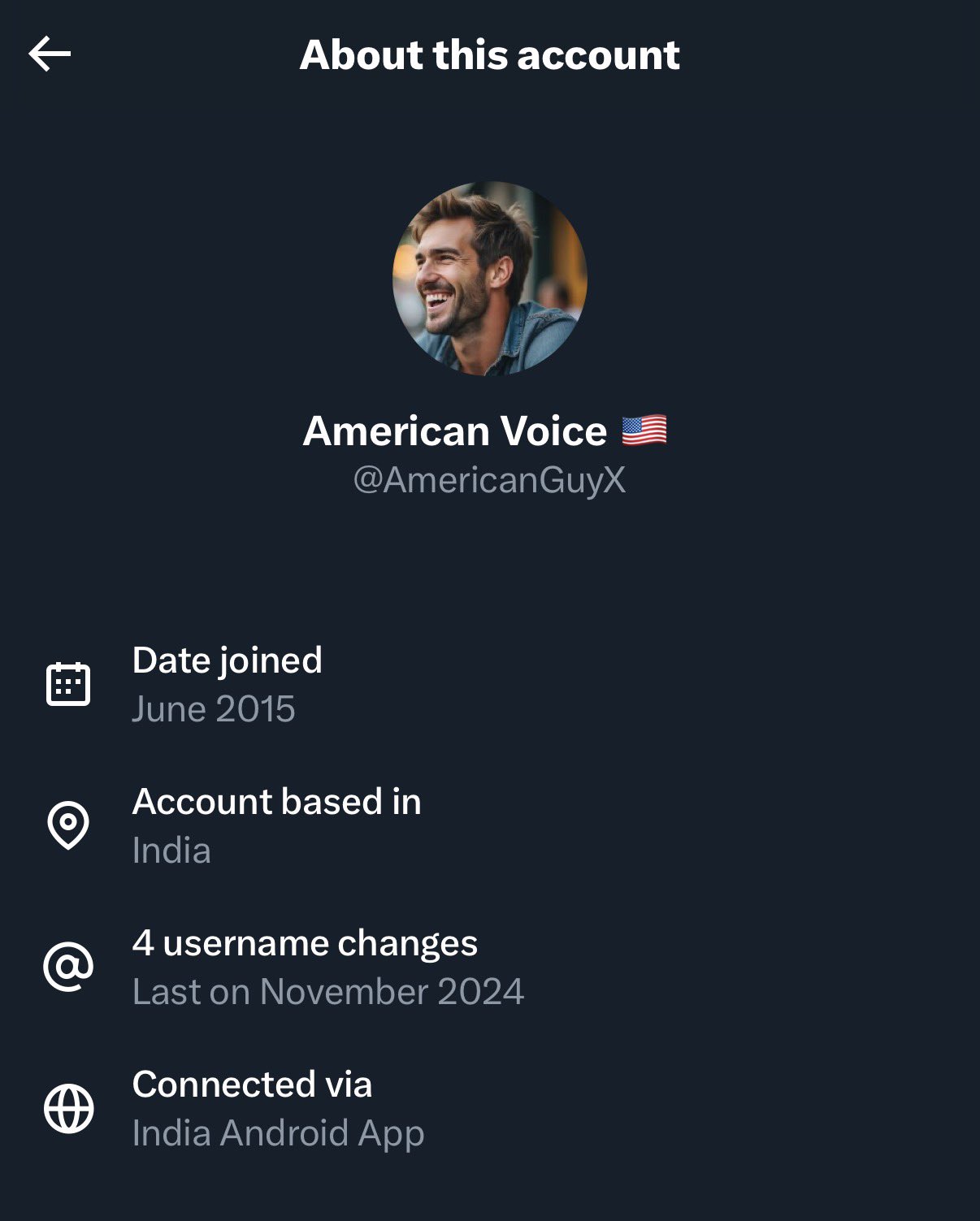
A reverse engineer found in the application code that X was developing a warning function for VPN users – if a user is detected using a virtual private network to hide its location, its users will be labelled as “possibly inaccurate country/area information”. The timing of the go-live is not clear. X was not the first social platform to introduce such transparency measures, and Instagram had earlier introduced a similar “about this account” feature. This update was one of the most controversial changes since Mask acquired X, which was briefly withdrawn during the test due to technical problems. There are several well-known accounts that claim to be in conflict with the actual country in which they are located, such as the location of American Voice, an American advocacy agency in the United States.
Observers believe that the geolocation function will be an important tool for identifying misleading content, false identities and robotic accounts. Updates, however, have also given rise to widespread controversy: defenders fear that the exposure of national information will put users at risk, while others question the reliability of positioning when using VPN. Preliminary information indicates that X may allow the user to display only the approximate area, but that the account that hides the location data will receive a special label. Prior to this update, the platform had just cleared 1.7 million robot accounts suspected of disrupting public dialogue. Nikita Bill referred to the new tool as the “account validation revolution”, emphasizing its usefulness in identifying false locator accounts, distinguishing between human accounts and detecting coordinated manipulation. Technical experts view this as part of a global trend towards digital identity transparency in the age of artificial intelligence, and it will become more difficult in the future to hide real geographic location.
Despite continuing disputes, the transparency function, which is about to be fully online, or through the exposure of false accounts and enhanced accountability for interactions, will reshape the user trust system of the Platform. This marks a critical step in strengthening digital integrity in the current context of growing misinformation and identity manipulation.